

What Are No Zones for Large Trucks in Phoenix, Arizona?
February 15, 2026 – James Flynn, Esq and Riah Greathouse, Esq
Large trucks move across Phoenix roadways all day and night. When you drive near them, you may feel uneasy, especially when a tractor-trailer drifts slightly in its lane or slows without warning on I-10 or Loop 202. That reaction makes sense. You sit in a smaller vehicle with far less protection, and a commercial truck can weigh 20 times more than a passenger vehicle. If you’ve ever wondered why a truck seemed unable to see you or react to your position on the road, you may have also asked what are no zones for large trucks and how these blind areas influence safety.
If you were involved in a Phoenix truck accident linked to a no-zone issue, you may still be dealing with medical bills, lost wages, or trauma from the crash. Many truck accident victims feel overwhelmed by the sudden weight of medical expenses, calls from insurance companies, and pressure to manage a truck accident claim while recovering from serious injuries. Knowing how no zones work gives you context for what happened and why these collisions create such severe consequences.
This blog explains how no zones work, the risks they create on Phoenix highways, and how liability is evaluated when a collision occurs inside one of these blind areas.
At a Glance
- No zones are the large blind spots around commercial trucks where a truck driver cannot see nearby passenger vehicles.
- Phoenix roadways see frequent truck accidents linked to lane changes, wide turns, highway speeds, and driver fatigue.
- These crashes often cause serious injuries, including spinal cord injuries, traumatic brain injuries, and internal injuries.
- Multiple potentially liable parties may be involved, including the driver, the trucking company, cargo loaders, or the truck manufacturer.
- Arizona applies state traffic rules and federal trucking regulations, which influence how fault is assigned in a Phoenix truck accident claim.
- Documentation, such as driver logs, black-box data, dash-camera footage, and maintenance records, often plays a major role in determining responsibility.
- A truck accident lawyer can assess the evidence, identify liable parties, and organize the claim or lawsuit when insurance companies challenge the facts.
What Are No Zones Around Large Trucks?
No zones are the blind spots surrounding a commercial truck. Traditional passenger vehicles have blind spots too, but the scale is completely different. A tractor-trailer’s blind areas stretch longer, higher, and wider, and these gaps limit what a truck driver can see even with extended mirrors.
You share Phoenix roads with vehicles in the commercial trucking industry every day. When you understand how these zones work, you’re better positioned to protect yourself and recognize when a trucking company or driver may have contributed to a collision.
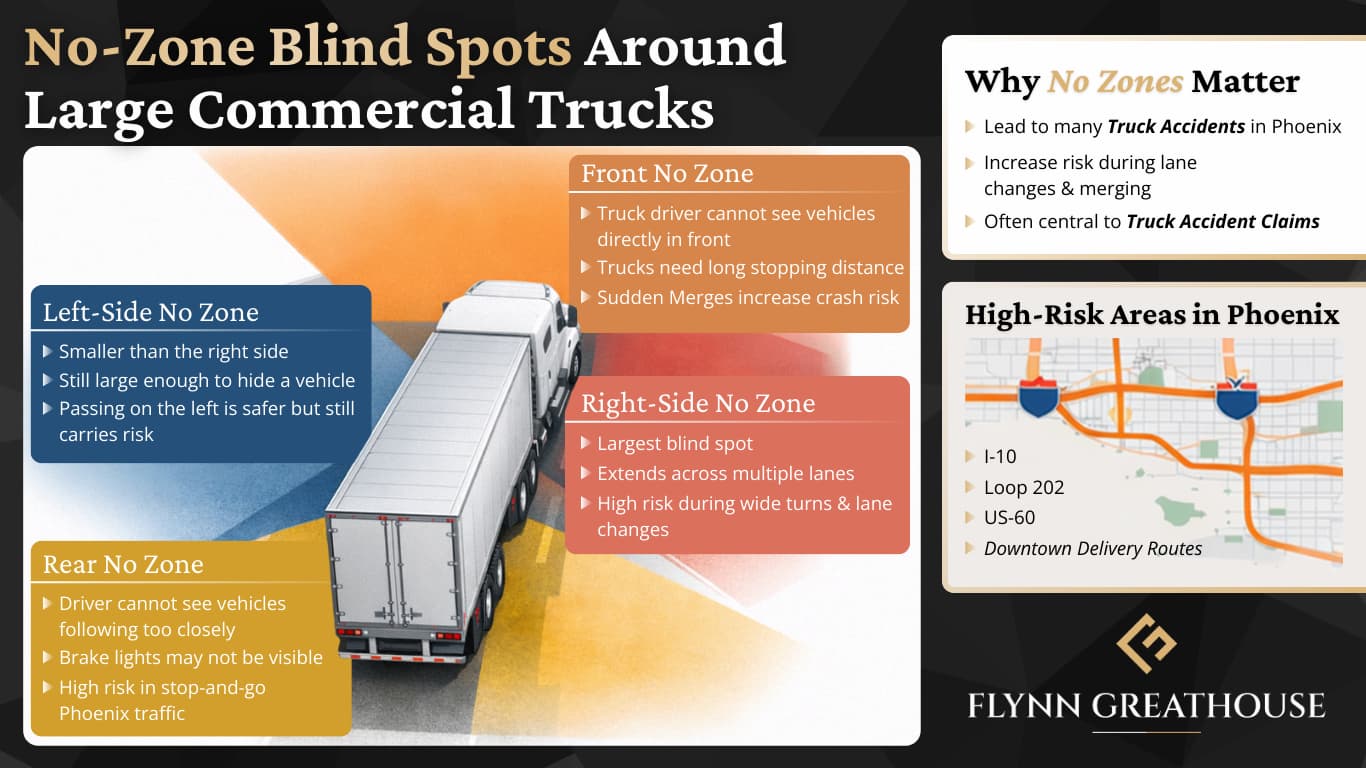
The Four Primary No Zones
1. The Right-Side No Zone
This is the largest no zone and the most dangerous. It extends outward across multiple lanes. Phoenix traffic patterns and lane-splitting behaviors create frequent right-side interactions, and many truck collisions stem from cars lingering too long in this area. When a driver makes a wide turn through downtown Phoenix or near warehouse districts, your vehicle may be completely hidden.
2. The Left-Side No Zone
The left side is smaller but still large enough to hide passenger vehicles. Passing on the left is safer than the right, yet it still carries risk when the truck driver attempts to shift lanes without realizing you’re beside the trailer.
3. The Front No Zone
Trucks require long stopping distances, and a car in front of a semi occupies a hidden area the driver cannot see. Rear-end truck crashes in Phoenix often occur when drivers merge too closely in front of a tractor-trailer on US-60 or I-17.
4. The Rear No Zone
If you’re directly behind a semi, you may not see brake lights early enough to react. Phoenix’s stop-and-go traffic increases the chance of rear-end collisions when drivers follow too closely.

How No Zones Contribute to Truck Accidents in Phoenix
Arizona sees a significant number of large-truck collisions each year, and Phoenix accounts for a substantial portion due to its dense traffic, distribution centers, and heavy highway use. When a commercial truck’s blind spots combine with high speeds or tight turns, the risk of serious accidents increases quickly.
Limited Visibility in Dense Urban Traffic
Trucks move through industrial corridors, the I-10 and I-17 systems, and downtown delivery routes. Lane changes, left turns, and quick merges can place smaller passenger vehicles inside a no zone without the truck driver realizing it. These situations appear often in Phoenix truck accident cases where visibility and lane positioning are disputed.
Wide Turns on City Streets
A right turn requires a truck to swing outward, creating room for the trailer to clear the corner. A driver waiting beside the trailer may be completely hidden, increasing the chance of contact during the turn. These impacts often lead to truck accident lawsuit filings involving internal injuries or catastrophic injuries.
Driver Fatigue and Reduced Awareness
Driver fatigue remains a known factor in many commercial truck accidents. When fatigue slows reaction time or reduces mirror checks, a vehicle in a no zone can go unnoticed. This issue appears in many accidents involving lane changes or nighttime traffic.
High-Speed Impacts on Phoenix Highways
On highways like Loop 202 or US-60, a vehicle hidden in a no zone at higher speeds leaves a truck driver with little space to brake or maneuver. Collisions at these speeds often lead to spinal cord injuries, traumatic brain injuries, or long-term future medical expenses.
Why No-Zone Accidents Are More Complicated Than Typical Car Accidents
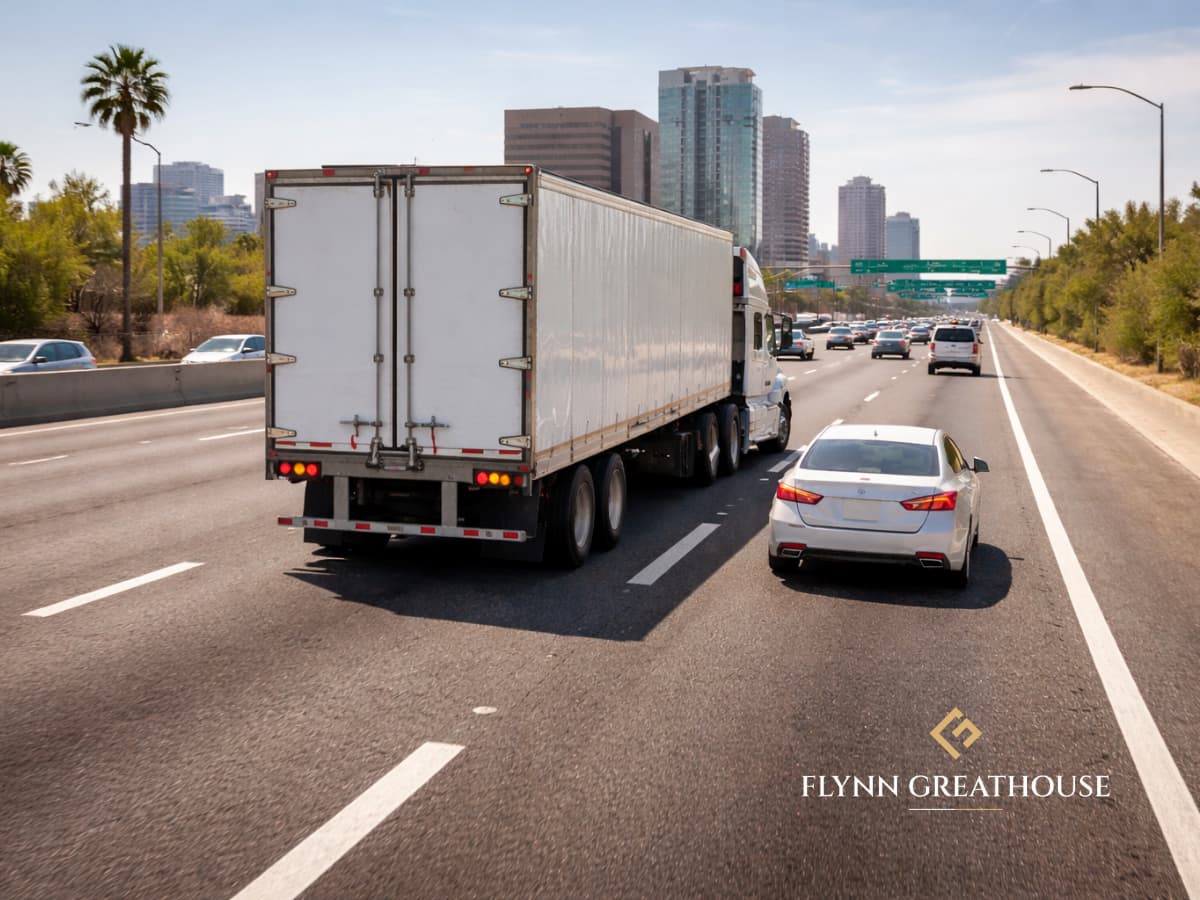
No-zone collisions introduce layers of investigation that almost never appear in a typical motor vehicle accident. A commercial truck’s size, turning radius, mirror placement, and blind-spot layout create visibility gaps that require a deeper look at how the crash actually occurred. Investigators often need to evaluate mirror angles, cab height, approach paths, driver-log entries, and traffic conditions to understand why the truck driver could not see nearby vehicles.
These cases also involve more technical evidence. A no-zone crash may require black-box data, dash-camera footage, maintenance files, GPS records, weigh-station reports, and federal trucking compliance documents. Because commercial trucks operate under strict federal rules, even a single violation, such as improper inspections or unsafe scheduling, can influence how fault is assigned.
For you, this complexity means two things:
- A no-zone collision requires careful analysis, even when the truck driver claims they “didn’t see you.”
- Stronger documentation helps clarify the role of the blind spot, especially when statements conflict or multiple parties are involved.
When the evidence shows how the blind-spot position influenced the collision, it becomes easier to challenge disputed facts, explain what really happened, and pursue the compensation tied to your injuries.
What Arizona Law Says About Fault in Truck Accidents
Arizona follows a pure comparative fault rule. That means liability splits based on the degree of fault assigned to each person or entity. If the investigation reveals that the truck driver or trucking company failed to operate safely around no zones, this information becomes central to liability assignments.
When multiple parties play a role, claims may extend to a personal injury lawsuit, a truck accident case, or a wrongful death claim, depending on the facts.

Who May Be Responsible in a No-Zone Truck Accident Claim
Liability in a no-zone collision often extends beyond the person driving the truck because commercial carriers in Arizona must follow both state traffic laws and federal trucking regulations. These rules cover everything from driver hours to inspection routines and cargo securement, and a breakdown in any of these areas can contribute to a no-zone crash.
When a no-zone impact occurs, the key question becomes which party failed to meet those obligations and how that failure influenced the collision. Answering that question determines whether you can file a Phoenix truck accident claim, or bring a wrongful death claim in severe cases.
Potentially Liable Parties
- Truck Drivers. A driver may fail to check mirrors, overcorrect, take a turn too sharply, or change lanes without clearing blind spots.
- Trucking Companies. A trucking company may be responsible for unsafe schedules, inadequate training, or improper monitoring. Sometimes a trucking company’s insurance provider plays a large role in how a claim progresses.
- Cargo Loaders. Improper loading can cause swaying, tipping, or shifting weight, making it harder for the driver to control the truck.
- Truck Manufacturers. Faulty mirrors, braking systems, sensors, or safety equipment can contribute to no-zone collisions.
- Other Drivers. No-zone accidents occasionally involve chain reactions. Another motorist may drive unpredictably, forcing you into a blind spot.
Common Injuries Linked to No-Zone Truck Accidents
When no-zone collisions occur, the injuries can be devastating because of the force involved. Common truck accident injuries include:
- Fractured bones
- Internal injuries
- Spinal cord injuries
- Traumatic brain injuries
- Burns or crush injuries
- Joint damage from sudden impact
- Soft-tissue injuries requiring extended treatment
These injuries often create mounting medical bills, ongoing treatment needs, and, in the most severe situations, wrongful death.
What You Should Do After a No-Zone Truck Accident in Phoenix
Your actions after a crash influence how a truck accident claim or truck accident lawsuit develops. These cases move quickly because insurance adjusters aim to manage liability and preserve the trucking company’s interests.
Get Medical Care Right Away
Some injuries, including internal injuries and concussions, may not be obvious at the scene. Documentation supports your personal injury claim and creates a timeline that connects the crash to your condition.
Report the Collision
Phoenix police reports often become key documents in motor vehicle accident cases. They show crash diagrams, driver statements, and witness details.
Document What You Can
When you’re able, collect information such as:
- Photos of the vehicles
- Location markers
- Skid marks
- Truck USDOT number
- Witness contact information
These materials help later when you or your legal team work to gather evidence.
Track Your Losses
No-zone crashes often bring:
- Lost wages
- Medical bills
- Future medical expenses
- Vehicle replacement or repair costs
Detailed records support compensation tied to your injuries, or long-term damages if you’ve suffered catastrophic injuries.
How Evidence Shapes a Phoenix Truck Accident Case
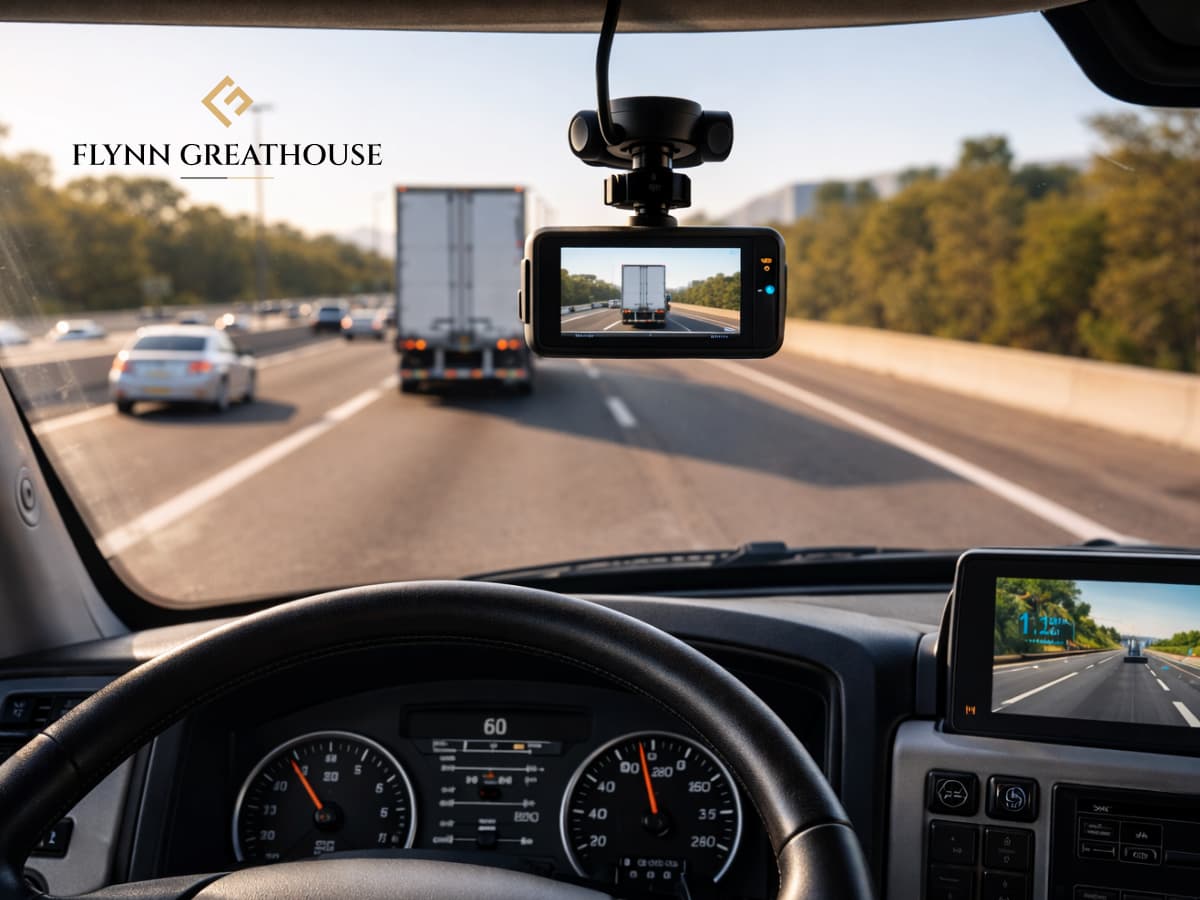
The success of a Phoenix truck accident claim often depends on how quickly and thoroughly the legal team documents the facts. Important evidence may include:
- Black-box data
- Braking records
- Mirror angles
- Dash cam or surveillance footage
- Weigh-station records
- Driver-log entries
- Cargo manifests
Thorough documentation helps establish how the no zone played a part in the crash. When evidence contradicts the company’s narrative, the case may move toward litigation, triggering a formal truck accident lawsuit.
When Commercial Trucking Policies Influence the Case
The commercial trucking sector carries high insurance limits. Policies often involve corporate carriers, national brokers, or specialty underwriters. These companies study claims closely because the financial exposure is high.
Truck accident attorneys may encounter resistance from large carriers or the trucking company’s insurance provider when calculating damages or evaluating medical expenses and future medical expenses. No-zone truck accidents can lead to disputes about visibility, driver training, and federal compliance.

Compensation After a No-Zone Crash
While no attorney can predict the exact value of a claim at the start, these cases often include damages tied to:
- Hospital treatment
- Surgery or long-term therapy
- Lost wages
- Diminished earning capacity
- Permanent disabilities
- Property loss
- Mental and emotional stress
Cases involving fatal truck accident situations or wrongful death require additional analysis. Your path forward depends on your injuries, timelines, available insurance, and the strength of the evidence.
How a Phoenix Injury Attorney Supports Truck Accident Victims
A Phoenix injury attorney handling commercial truck accidents focuses on the technical details that shape a no-zone case. These collisions often require a structured review of mirror placement, driver behavior, trailer movement, and roadway positioning to determine how the hidden area contributed to the impact. An attorney studies driver logs, inspection records, black-box data, and compliance documents tied to federal trucking regulations to understand where safety gaps may have occurred.
The attorney also examines how the trucking company handled its schedules, training requirements, and maintenance routines. When disputes arise about visibility, lane changes, turn angles, or blind-spot monitoring, your legal team evaluates the evidence and prepares arguments for negotiations or litigation. This includes interpreting company policies, identifying potentially liable parties, reviewing maintenance logs, and analyzing the role of insurance companies when they challenge the facts of the claim.
A no-zone collision often involves complex interactions between blind-spot placement, driver conduct, equipment condition, and regulatory compliance. A truck accident attorney brings these elements together, organizes the supporting material, and builds a clear explanation of how the crash occurred and how the no-zone position influenced the severity of the injuries.
Frequently Asked Questions
Q: What are no zones for large trucks?
A: No zones are the large blind spots around commercial trucks where a truck driver cannot see nearby passenger vehicles. These areas exist on both sides of the trailer, along the rear, and directly in front of the cab. Many Phoenix truck accident cases begin when a vehicle enters one of these hidden areas.
Q: Why are no-zone truck accidents more severe than typical car accidents?
A: Collisions inside a no zone often involve higher force because trucks need longer distances to stop and have limited visibility. These crashes commonly lead to serious injuries, including spinal cord injuries, traumatic brain injuries, and internal injuries.
Q: Who may be responsible for a no-zone truck accident in Phoenix?
A: Liability may fall on several parties, including the truck driver, the trucking company, cargo loaders, maintenance teams, or the truck manufacturer. Arizona’s traffic rules and federal trucking regulations play a major role in determining which party contributed to the unsafe conditions.
Q: What should I do if I was hit by a truck that didn’t see me in the no zone?
A: Seek medical care, report the collision, gather photos or documents when possible, and track your losses. These steps support your truck accident claim and help your legal team gather evidence if the insurance companies dispute the crash details.
Q: How can a truck accident attorney support my claim?
A: A truck accident attorney examines driver logs, black-box data, maintenance records, visibility issues, and compliance with federal trucking regulations. The attorney identifies potentially liable parties, organizes the documentation, and prepares the claim or lawsuit when the trucking company challenges fault.
Talk With a Legal Team That Focuses on Motor Vehicle Accidents
Truck Accident Lawyers Serving Clients Nationwide
No-zone truck crashes often involve visibility gaps, federal compliance issues, and multiple parties with competing accounts of what happened. At Flynn Greathouse, our work centers on motor vehicle accident cases, including complex commercial truck accidents throughout Phoenix. We study the evidence, examine the no-zone positions involved, and build a structured case that reflects the full impact of the collision.
If you’re looking for a truck accident lawyer who understands how these crashes unfold and what it takes to move a claim forward, our team is ready to review your situation. We offer free virtual consultations, and you can speak with us from anywhere.
Call Flynn Greathouse today at (888) 82-FG-LAW(888) 82-FG-LAW to schedule your free virtual consultation, or fill out our confidential online form. We help injured victims hold trucking companies, drivers, and insurers accountable with personalized legal support and deep courtroom experience.
We’ll handle the legal side while you focus on moving forward.
Copyright © 2026. Flynn Greathouse. All rights reserved.
The information in this blog post (“post”) is provided for general informational purposes only and may not reflect the current law in your jurisdiction. No information in this post should be construed as legal advice from the individual author or the law firm, nor is it intended to be a substitute for legal counsel on any subject matter. No reader of this post should act or refrain from acting based on any information included in or accessible through this post without seeking the appropriate legal or other professional advice on the particular facts and circumstances at issue from a lawyer licensed in the recipient’s state, country, or other appropriate licensing jurisdiction.
Flynn Greathouse
2 N Central Ave, Suite 1844
Phoenix, AZ 85004
(602) 777-3476
(888) 82-FG-LAW(888) 82-FG-LAW
http://mycaraccidentattorneys.com/
Mr. Greathouse, founder of Greathouse Trial Law, has handled over 5,000 criminal and civil matters across Georgia, securing more than $50 million for injured victims. A top 10% law school graduate, former Assistant District Attorney, and nationally recognized trial lawyer, he combines deep courtroom experience with a commitment to justice reform and community service.
Mr. Flynn, founding partner of The Flynn Law Firm, P.A., has a strong background in plaintiff subrogation, product liability, and construction defect litigation, as well as experience as an Assistant State Attorney in Pinellas County. A respected leader in the legal community, he has served as President of multiple bar associations and as General Counsel of the Pinellas County Urban League. Outside the courtroom, he is a dedicated husband and father.
Related Blog Posts
Arizona Auto Insurance Alert: Are You Paying for Coverage You Can’t Use?
PHOENIX, Arizona – With the rising costs of medical care and vehicle repairs, relying on Arizona’s minimum auto insurance requirements is a financial gamble most drivers cannot afford to take.…
An Uninsured Driver Hit Me in Phoenix, Arizona. What Should I Do?
You were just making a quick trip to the store. One moment you were driving through Phoenix, maybe heading down one of the busy Arizona roads or sitting at a…
What Is Bobtailing and Why Is It Dangerous in Phoenix, Arizona?
If you were involved in a truck accident in Phoenix, you’re probably not searching online for “what is bobtailing” out of curiosity. You’re searching because something about that commercial truck…
Flynn Greathouse Launches Personal Injury Quiz to Support Accident Victims
PHOENIX, Arizona — Flynn Greathouse, a personal injury law firm headquartered in Phoenix, Arizona and serving injured people nationwide, has announced the launch of its new Personal Injury Claims Quiz,…
Phoenix Rideshare Crashes Create Insurance Nightmares for Injured Victims
PHOENIX, Arizona – The rapid expansion of the gig economy has transformed transportation across Arizona, but for injured victims, it has also created a complex and often overwhelming insurance maze.…
When Is a Car Considered Totaled in Phoenix, Arizona?
Your car is more than transportation. It’s how you get to work, pick up groceries, take your dog to the vet, or get across Phoenix without thinking twice. For most…
Flynn Greathouse Expands Nationwide with Client-First Injury Advocacy
PHOENIX, Arizona – Flynn Greathouse, a rapidly expanding personal injury law firm headquartered in Phoenix, Arizona, proudly announces its nationwide rollout, strengthening its commitment to serve injured victims across the…
Motorcycle Safety Tips Every Rider in Phoenix, Arizona Should Know
Riding a motorcycle in Phoenix gives you a type of freedom that’s hard to match. At the same time, it brings risks that can change your life in seconds. Maybe…
How to File a National General Claim After a Car Accident in Phoenix, Arizona
If you’ve been in a car accident in Phoenix or anywhere else in Arizona, you’re probably dealing with more than just a damaged vehicle. From medical bills and lost wages…
What Are the Most Common Driving Distractions in Phoenix, Arizona?
Car accidents in Phoenix are not always caused by reckless speeding or hazardous weather. Many occur in a split second when a driver takes their eyes, hands, or mind off…